Somewhere like the Costa del Sol, where light, sea and a slower pace are part of ordinary life, a home can genuinely become a place of rest. Feng shui applied to interior design is one of the tools I use to get there: an old discipline that, trends aside, asks a simple question — is this space working with the people who live in it, or against them?
What feng shui means in interior design
Feng shui is a Chinese practice concerned with how the arrangement of a space affects your energy, your sleep and your mood. Applied to interiors, it has nothing to do with filling a house with charms. It is about ordering light, furniture, colour and circulation so the room supports whoever lives in it.
The principles of a home in balance
The flow of chi
Chi is the energy that moves through a room. Where a space is clear and well organised, it moves easily; where there is clutter or badly placed furniture, it stalls. That is why the first step is always clarity — clean circulation, an uncluttered entrance, and everything with a place of its own.
The five elements
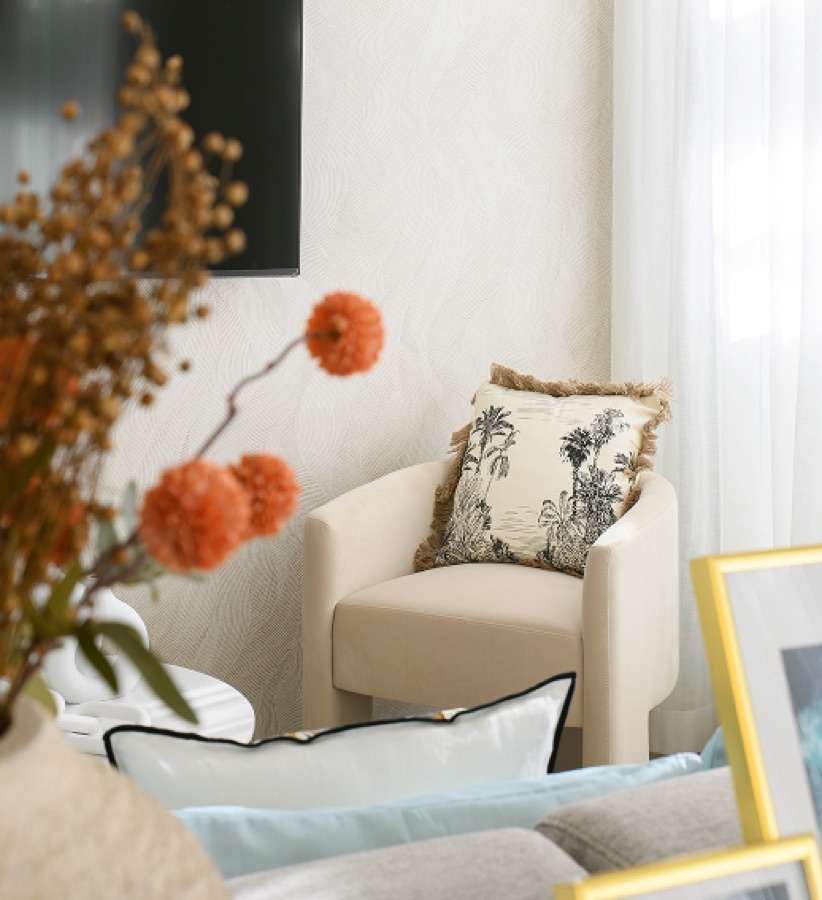
Wood, fire, earth, metal and water. Balancing these five through materials, textures and colour is what brings a room into harmony. A calm palette of powdered tones, pale wood and natural textiles — the sort of thing that already suits a Mediterranean home — fits this way of working almost without trying.
The bagua map
The bagua links areas of a home to areas of a life: rest, relationships, prosperity. It helps decide what each space is for and how to reinforce it through lighting, colour and layout.
Feng shui in Costa del Sol homes
Houses here have advantages worth using. Generous natural light, a strong connection to the outside, and materials that already belong to the landscape. Working with feng shui in Marbella usually means opening up sightlines, letting daylight reach further into the house, and choosing finishes that feel warm underfoot and calm to the eye.
Practical places to start
- Clear the entrance. It is the first thing you meet and it sets the tone.
- Keep circulation routes free, especially between the door, the kitchen and the bedrooms.
- Position the bed so you can see the door without facing it directly.
- Choose a coherent palette across the whole home rather than a different mood per room.
- Bring in plants and living materials to balance harder surfaces.
A home that looks after the people in it
Feng shui is not a rulebook. It is a way of reading a space on purpose. Combined with emotional interior design and neuroarchitecture, it lets me design homes that are not only good-looking but genuinely better to live in. If you would like to make your home on the Costa del Sol a calmer place, tell me about your project.